
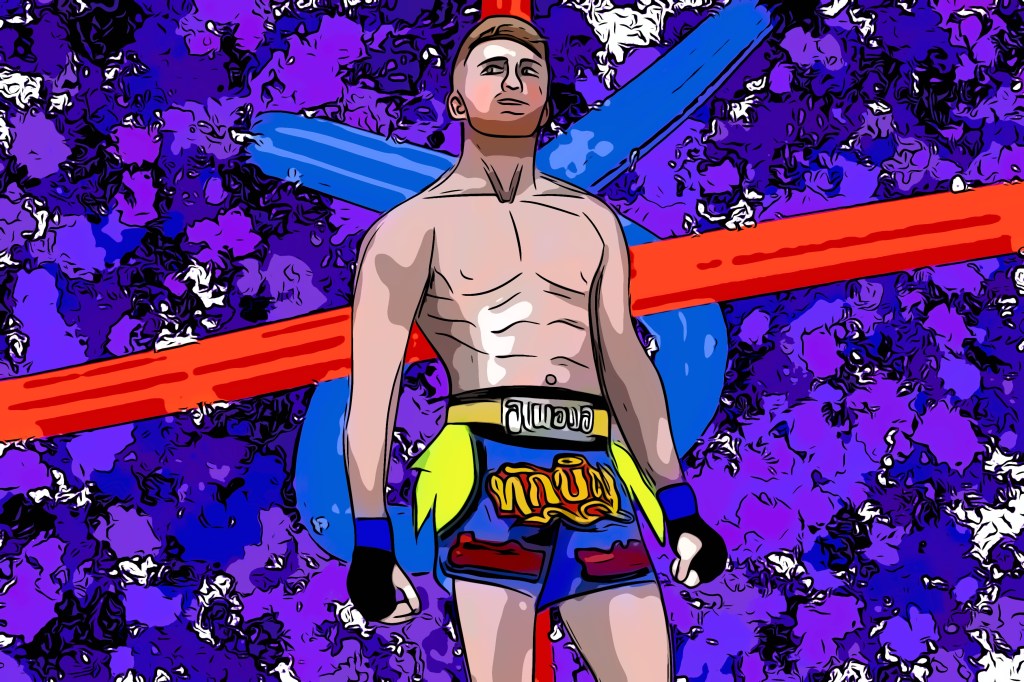
Switch-Stepping
There’s a beauty to Haggerty’s switch-step: It’s utilized as a foundation to build fakes and legitimate attacks while acting as a defensive barrier by evoking reactions and manipulating the opponent’s position relative to the ring. It’s a subtle gesture that I’ve really come to appreciate over the course of doing film study on Haggerty. Many strikers tend to unload offense in the form of pre-determined combinations otherwise known as “padwork combos.” However what you see on the pads nine times out of ten never comes to fruition. It’s the small details in-between smashing mitts that reveals itself on fight night, small resets, decreases in composure, lack of exits and feinting entries. Some people just adopt the philosophy of jumping in, losing eye contact, abandoning punching mechanics and positioning, biting down and hoping for the best.
I believe this is where Haggerty differs from the pack, he possesses a deep repertoire of slick entries and smooth misdirections; each one layered and interchangeable. It’s like you have 3 moves to work with and various patterns or orders of linking them. Haggerty essentially turns 3, into 3 x 3.
Any fighter can feint, in fact most movements in themselves are feints, but every fighter’s ability to feint isn’t equal. Feinting is a skillset and skillsets can be developed. Expert technicians relentlessly focus on drilling subtleties, Sugar Ray Robinson would practice in the mirror for hours, to the point of tricking himself. With feinting comes an innate ability to think from the other fighter’s perspective, which requires a bit of compassion or empathy. Here’s two equations that may pass through a technican’s head in the heat of the moment:
1) “I’ll convince him to think “X” is coming, but instead I’ll do “Y.”
2) “If I do “X” he’ll respond with “Y.” So I’ll make him think “X” is coming, I’ll let him do “Y,” then I’ll counter with “Z.”
All the weight is shifted onto the backfoot and used to springboard the rear hip forward.
The Switch-Step makes it extremely difficult to get a read on Haggerty’s timing and entries. The movement itself is a phenomenal tool for changing speed by accelerating off the lead foot. If you’ve ever played the NBA 2K series, you’re probably familiar with the size-up and hesitation animations designed to throw off defenders. The Switch-Step is on par with basketball’s Scissor-Step, an initial explosive movement that puts you into a position to pursue with your attack or “drive” while also putting you into position to chain other movements off it.
To sell the feint and close distance, Haggerty uses an exaggerated step-back with the lead-leg to bounce forward. Afterwards Haggerty will show the opponent a smaller, non-committal Switch-Step while stationary, to draw out counters as he stays out of range. The downside to this technique is that it makes the fighter vulnerable to being caught in-between stances as the feet cross together. The plus side is, it’s a very dangerous feint not to respect, especially if the opponent has been digging to the body with open-side roundkicks, making each little twitch or pull of the lead leg all the more effective. Think of it this way, instead of a switch-step where both feet move at the same time, he’s bringing the right foot up and launching off the left foot to change stances again. He’ll use it when he’s at a relatively safe distance, usually at the edge of kicking range.
Another setup Haggerty has brilliantly been utilizing lately is the shifting-southpaw-hip-feint, a severely under-utilized technique from orthodox fighters. The reason most outside kickers could benefit from switching stances just before committing to their real attack, is to briefly disrupt the opponent’s rhythm and get them to remove their finger from the trigger, it’s especially good against fleeting counterpunchers. The initial southpaw hip feint is used to force Naito to retreat, Haggerty continues his attack where most would typically stop due to a fleeing opponent.
As Naito believes he’s safe to circle out, Haggerty shifts into orthodox, putting his lead-leg back within range to cutoff Naito’s lateral movement, by Pendulum-Stepping into an inside lowkick.
It’s a distance covering strike built off of a distance covering entrance.
Pendulum-Stepping
The Pendulum-Step is a technique commonly taught in fencing, Jeet Kune Do, Sanda and many other kicking arts. The technique is simple and only involves replacing the lead leg with the rear leg. The step adds a tremendous amount of momentum and weight-transfer into your step forward and can be extremely effective for quickly covering distance in situations where your opponent suspect’s you’re out of reach, typically outside, or on the end of kicking range.
Pendulum-Stepping can become more complex when adding offensive techniques onto the end of it. It’s a deceitful technique because there’s less telegraph than a traditional switch-step, and the Pendulum-Step can be disguised by the hands and upper-body movement. Some fighters prefer switch-stepping on lead roundhouse kicks to gain additional power, Rafael Fiziev does it effectively in MMA while covering lots of ground. Whereas other fighters like Stephen Thompson might prefer Pendulum-Stepping into lead roundhouses, for a quicker kick but at a loss of power. In Karate or Taekwondo, you’re guarenteed to see fighters Pendulum-Stepping into side kicks, hook kicks and lead roundkicks. Suspend disbelief for a moment and examine this exaggerated version of it.
While watching Muay Thai, it’s common to see fighters chamber their lead-leg and Pendulum-Stepping into a “hopping teep,” covering that extra bit of distance needed to land the kick. Ultimately, I believe it’s best to practice both styles, leading to a more dexterous and well-rounded lead-leg kicking game. However, Haggerty’s recent performance caught my eye, where he was chaining patterns together from Shifts, Pendulum-Steps and Switch-Steps to traverse long stretches of ground, delay the timing of his entry, and constantly force Naito to reset.
Let’s take a detour from the Pendulum-Step and look at how our glorious Kyokushin boi, Andy Hug, implementing a shift into a southpaw-stance to setup one of the nastiest back-kicks I’ve laid eyes on.
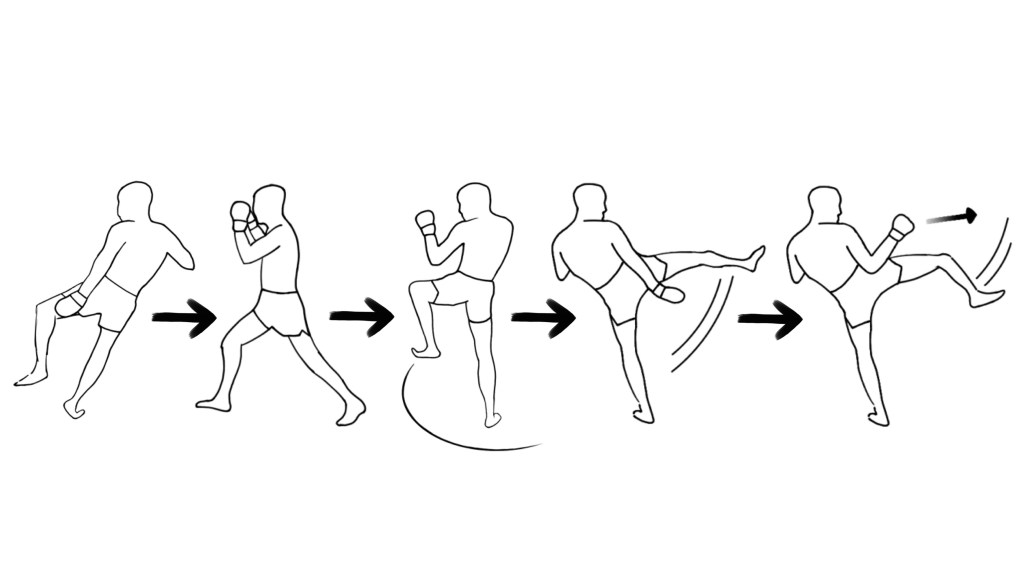
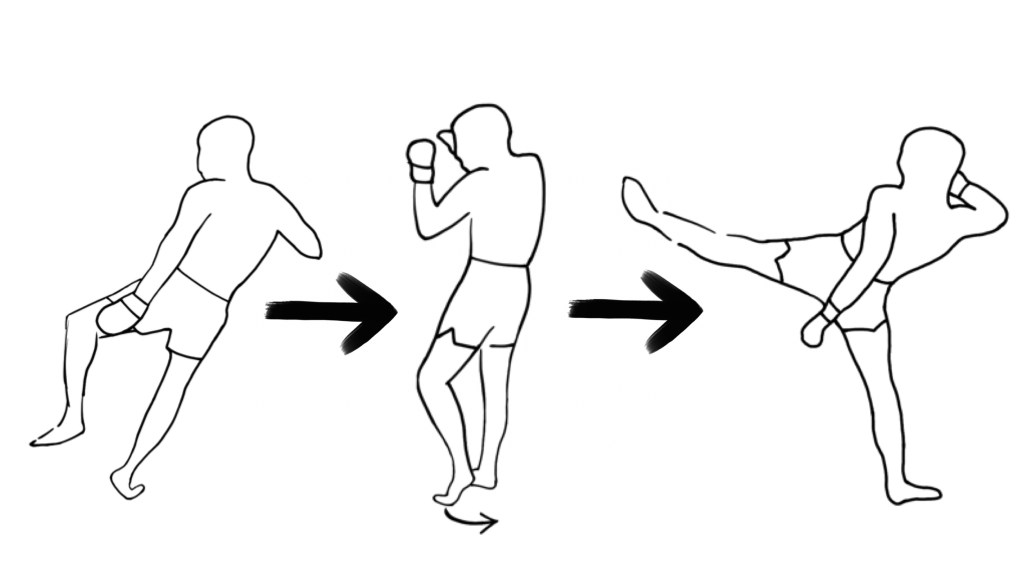
In order to place your target in perfect position for the spinning back kick, one must align their feet in a straight line. There’s two ways to go about this in-front of an opponent:
1) The first is the most basic, simply bringing either the lead or rear foot across and lining the feet up, the downside to this method is the opponent’s likely to recognize the spin being set into motion and can take measures to avoid the kick.
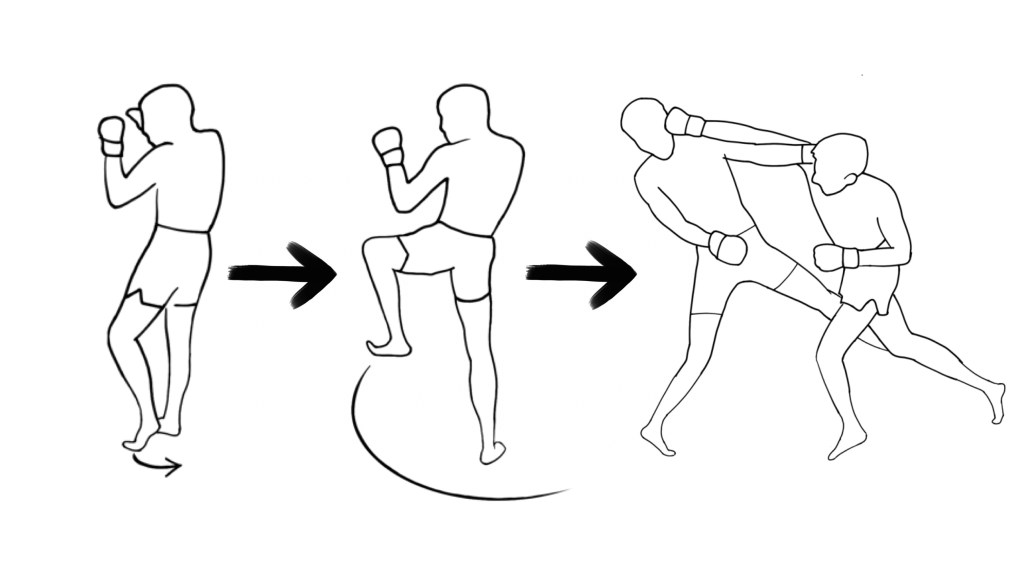
2) A more deceptive approach is to allow the opponent to do the work for you, by letting them circle towards your closed-side and past your lead foot (they can be corralled by threatening with the rear hand) putting your feet directly in-line with each other for the spin.
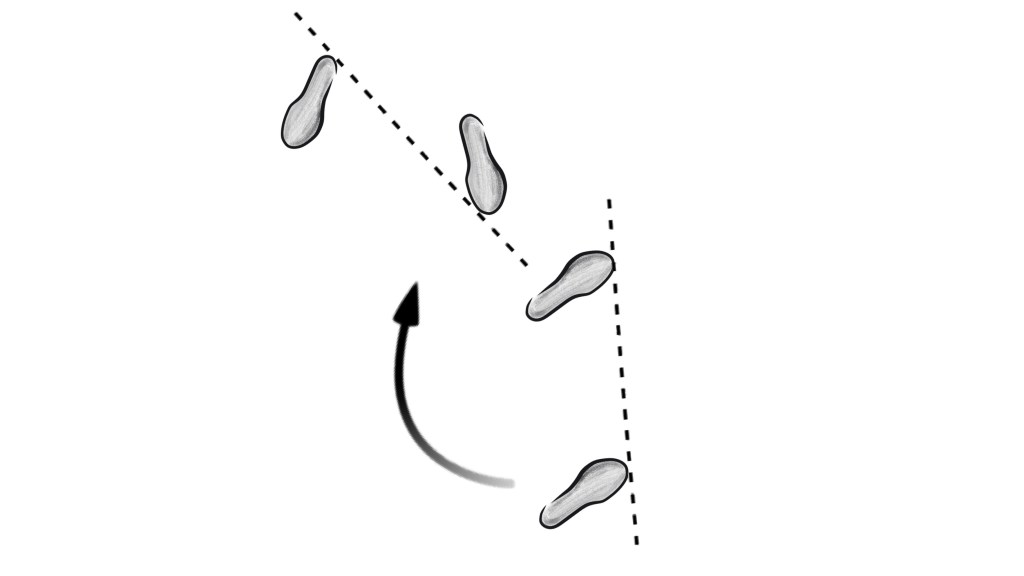
The footwork diagram above displays a position in boxing where you’re safe 99% of the time, because once you get past the opponent’s lead foot, the angle is designed to protect from the opponent’s rear hand. In kickboxing, this position puts you in line for the opponent’s spinning heel/side kicks and spinning backfists.
However, if you hate waiting for the opponent to give you that opportunity, and would like to take the initiative, I have just the solution for you via Andy Hug. Using the retraction of the front kick (Mae-Geri) to disguise the shift and foot placement for the back kick (Ura Ushiro Geri).

The benefit of the back kick is it comes straight up the centerline making it difficult to read, whereas on the turning side-kick you’d chamber the kicking leg and bring it off the centerline to generate more power. There are other minor details to get the most out of your back kick, like tilting the chest forward instead of standing tall, which would prevent you from extending the kicking leg.
The toes will be pointing down at a 45 degree angle (instead of being turned side-on at 90 degrees) in order to hit with the outside edge of the foot, otherwise referred to as “the blade of the foot” in Kyokushin. Back kicks can be devastating when applied correctly but they do leave you in a position where it’s difficult to follow up if the opponent moves off the centerline or takes a step out of range.
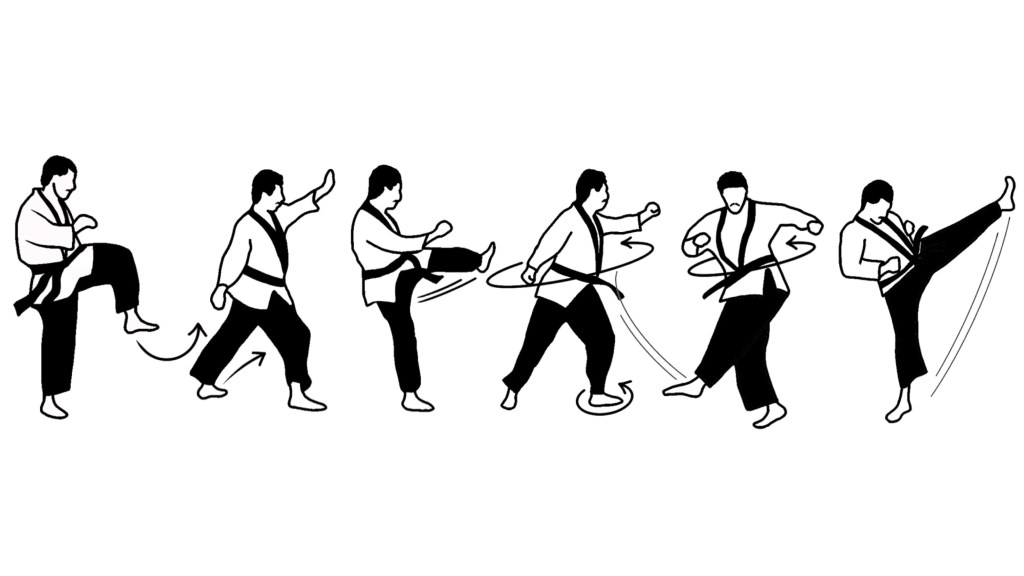
Hug demonstrates a beautiful setup for the Ushiro Mawashi Geri (spinning heel kick). The Mae Geri (front kick) is more of a stabbing kick than a Thai push kick or teep, and simply hides the step back into southpaw.
What comes next I like to look at as the Kyokushin bodywork equivalent to a boxer hooking off his jab, such a tactic subverts the opponent’s expectations and takes little commitment. Hug doubles up on the lead leg with a Mawashi Geri (round kick) meanwhile Hug’s right foot had been creeping its way closer and closer for the spinning heel kick.
Note how Andy brings his arms to the axis of rotation to help him spin quicker, and tilts the axis just enough so he’s not vertical. Most importantly, marvel at that flexibility and technique. As Bill Superfoot Wallace once said “That leg, is my 3rd hand.”
Here you’ll see Haggerty building on the concept of doubling up on the lead leg. Jon uses the non-committal pendulum lowkick to draw out potential counters before his real attack. Shifting backwards off kicks is a great tactic to bait the opponent forward. Coincidentally, it disguises the stance switch which will change the dynamic of the exchange, forcing the opponent to adjust before committing to their entry. It puts Haggerty in perfect position to counter the opponent’s counter with a southpaw teep.
That non-committal Pendulum-Step lowkick Haggerty throws, is sometimes just a setup to initiate the exchange and get the opponent coming forward with a counter, that way he can shift off the kicks retraction and spear them with the southpaw teep to the chest. Haggerty uses this tactic fairly often in his fights, an extremely well-timed one that floored Sam-A.
Teeps to the stomach have the effect of jamming forward movement but teeps to the chest can often send the opponent literally flying head-over-heels no matter how good their balance is, and it looks extremely badass. In the GIF above Superlek sets his teep up with a hip feint, and catches Keawkangwan as he’s trying to counter with his own teep.
Tawanchai PK.Saenchaimuaythaigym being perhaps one of the savviest teepers in Muay Thai today, with a natural feel for distance, timing and rhythm.
Tawanchai uses the lead teep to play multiple threats off each other and subvert expectations. He’ll either teep off the backfoot and double down on a second teep when Singtongnoi’s expecting the roundkick, or Tawanchai will push him out to range with hopping teeps, then will close the gap by faking it and stepping into knees.
pictured: Tawanchai sending Nuenglanlek to the moon
Part ll. Handtraps
First let’s look at how Haggerty builds off the shifting setup by implementing handtraps. Then we’ll dive deeper into the fundamentals of handtraps, why they’re important and when to use them.
This knockdown became a pivotal moment in the fight, not only securing the round for Haggerty but making a statement that even when participating in The Art of 8 Limbs, you can still get these hands.
Initially, Haggerty takes an “exaggerated” step-back to sell the southpaw kick and brings the knee up JUST ENOUGH to sell the teep feint while still being in position to plant quickly. This action draws Naito’s counter-kick, compromising his position by permitting himself one standing leg. Haggerty can plant on Naito’s centerline while sitting his weight down on a (now orthodox) rear hand.
Combining the shifting handtrap with teep feints can result in an overwhelming amount of misdirections for the opponent. Naito has to be cautious of Haggerty’s handtrap because an elbow can come raining down over the top of his rear glove. Not only does Haggerty’s handtrap direct Naito’s attention towards that side, but suddenly a hand that had no chance of landing, has morphed into a hand meant for guiding in the real attack.
A very digestible concept for interpreting the use of handtraps: Punches can be disguised by handtraps, and handtraps can be disguised by punches.
Handtraps are a fundamental tool for penetrating tight guards and creating openings. Typically dutch handtraps involve reaching across and trapping their opposite glove and often times the trap is disguised within a volley of non-committal punches or used as a one-off entry. We’ll look at multiple variations below, but first let’s get an understanding of the basics.
1. Lead Glove to Lead Glove Trapping
2. Rear Glove to Rear Glove Trapping
When trapping or swatting down the opponent’s glove, you typically take the opportunity to punch with your free hand. Lead glove to lead glove trapping typically involves following up with a right hook. When rear glove to rear glove trapping involves more risk because you square yourself up while reaching across the opponent but you’d typically follow up with a left hook. Fighter’s like Nieky Holzken and Lomachenko prefer to make their opponent’s shell up with combinations and manipulate rhythm to setup their handtraps, whereas a fighter like George Foreman prefers to always maintain contact using a mummy guard and will even trap arms to setup punches.
Theres a difference between trapping hands in the pocket and trapping hands as you enter. If you’re closing distance on an opponent, they’re anticipating a punch when you go to extend your hands. Whereas if you’re in the pocket, there’s usually a semblance of contact maintained between both fighters, whether its handfighting/glove touches, pushes off the guard, framing, and shoulder to shoulder positions. Meaning handtraps can be disguised within that contact, just as they can be disguised on entries.
Same-side handtraps, are extremely useful for elbows in clinching range or setting up straight punches with the rear hand from mid-range. A slight frame on their rear guard with your lead hand not only nullifies that hand for a short second, but also acts as a ‘primer’ for the legitimate attack.
For example, what does Kamaru Usman’s knockout over Jorge Masvidal and Haggerty’s knockdown over Naito, both have in common? The handtraps carry Usman and Haggerty into range while triggering the opponent’s counter, in this case Masvidal’s left hook and Naito’s lead lowkick.
Both put Masvidal and Naito in suboptimal positions to receive a right hand. If done correctly, a slight tug of the opponent’s rear glove can have the effect of slightly squaring their stance because it brings their rear shoulder forward, which opens up a dominant angle for the advancing fighter.
Throwing a slapping variation of the left hook, allows you to stay long while angling off to side, to align your rear hand with their centerline. We’ve covered this topic in the Raoni Barcelos video!
In 4oz gloves it becomes much easier to obtain grips and pry guards down than it is in a boxing glove. The lack of having a free thumb makes a huge difference, with most dutch-styled handtraps, you’ll see the fighter pull the glove straight down, mainly because it’s the only option they have in clunky 8-12oz gloves. The addition of a free thumb and a smaller glove allows for pulling, tugging, prying and manipulating!
Part lll. Handfighting & Handtraps
When ONE Championship isn’t hyper-inflating their viewership, they’re actually putting on exceptional striking matchups. I love traditional stadium muay thai, but there’s something about the implementation of 4oz gloves that adds a new flare to clinching and handfighting, sort of like bringing a third partner into a dieing relationship just to spice things up. There’s also nothing wrong with increasing the windows and opportunities for slicker-handed fighters to lace opponents with punches.
Petchmorakot vs Yodsanklai was a fight between two VERY evenly-matched southpaw opponents, concluding in leaving fans satisfied but salivating for a 6th round due to the non-stop exchanges and the seemingly unwritten rule between them, that they’d be penalized for not maintaining contact at all times, in other words a very “handsy” fight.
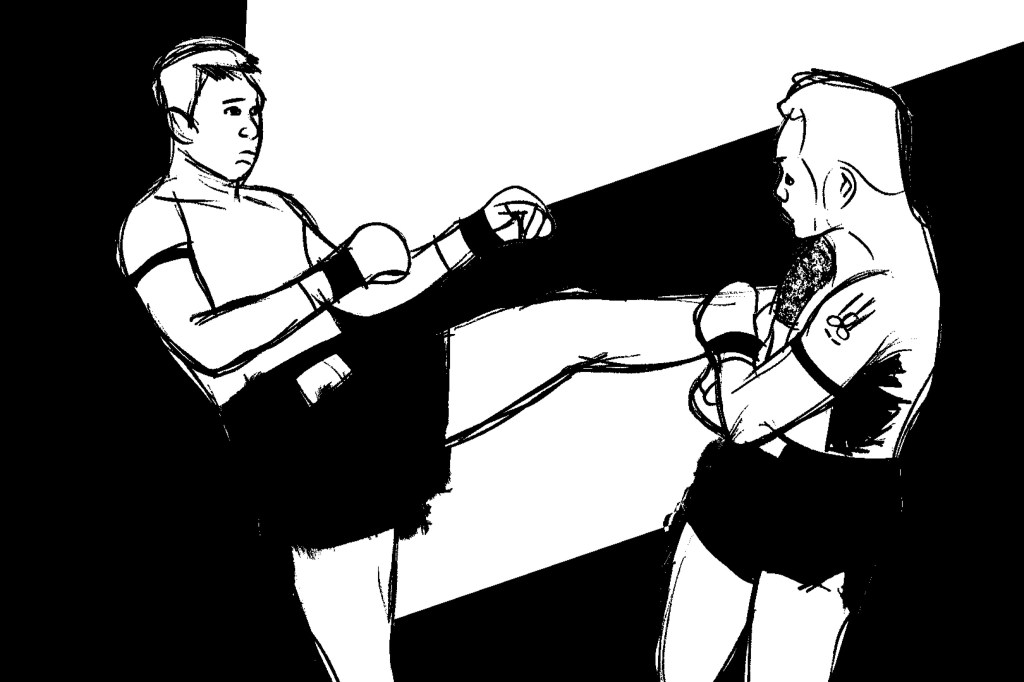
If both fighters engage in a battle of Closed-Stance Handfighting, a rhythm can be set, hands can be baited out of position or tied-up, in order to crack elbows over the top. In this case, a same-side handtrap from Petchmorakot.
This same tactic applies to the spinning elbow from Open-Stance. Haggerty will flash his lead hand to fake an engagement at handfighting, while stepping across so Sam-A can’t post/frame with his lead hand. (I expanded on spinning elbow tactics in a thread on Twitter, defiently check it out if you get a chance!)
To avoid having your guard manipulated by a handtrap, it takes anticipating the trap coming, in the GIF below, the trap comes off the handfight. Once Petchmorakot attempts trapping, Yodsanklai simply pulls his rear glove in towards himself and turns the forearm out to nullify it. However, Yodsanklai pressuring for the majority of the fight meant Petchmorakot would need to effectively fight off the backfoot and create space when needed, tieing-up hands is a great way to relieve pressure and off-balance the opponent, giving yourself a moment to angle off the ropes or circle out.
Theres a few options when avoiding dutch handtraps, the most reliable ways are pulling, or shoulder rolling and countering.
If there’s resistance pulling their guard down, their elbow is likely doing the heavy lifting and not covering the body, which allows you to use the handtrap as a feint to hit the body.
During his K-1 days, Alistair Overeem was famous for double handtrapping into knees.
Sangmanee will use handtraps in closed-stance, not to strip the opponent’s guard, but instead to nullify their hands and subconsciously raise their guard to setup roundkicks. He’ll bring the leg up in the same motion as a knee, then at the last second he’ll extend and turn the hip over, thrusting the top part of shinbone into the midsection. If the opponent’s within range, the point of the knee will land as well, technically making the strike an extreme variation of a side-on knee.
In kicking exchanges its incredibly important to know what stance your opponent’s gonna be in when you attack their open-side, throwing kicks at their closed-side runs the risk of bouncing your shin off an elbow, or a shinbone/knee if they’re competent defensively with raising checks. However that doesn’t mean not to kick the closed-side. Quite honestly I don’t think fighter’s attack the closed-side enough. Yes, an exceptional double-attack can be highly effective, it’s sometimes all southpaw fighters need to get by most opponent’s in lower level/regional scenes. Whereas orthodox fighter’s can end up getting tunnel vision, and mindlessly forcing lead roundkicks onto orthodox opponent’s which can become predictable.
Switching stances has been an age-old tactic, whether intentional (Willie Pep or Stanley Ketchel) or unintentional (Forrest Griffin). Switching stances can be an offensive launchpad or a defensive wall. When applied well, it can constantly change the dynamic of the fight while forcing the opponent to reassess when’s the best time to kick. Those small dynamic-shifts can buy fighters time to reset, or to take the initiative away from the opponent which is especially important within MMA.
Imagine you’ve backed your opponent up to the fence and you’re winning the handfight while lining up a thudding open-side bodykick. Just before you go to pivot on the standing foot for the kick…your opponent closes off their open-side by switching stances. Then they’re stepping off laterally into a new stance and spamming jab feints while running you into outside lowkicks, congratulations you now know what it feels like to fight Cory Sandhagen.
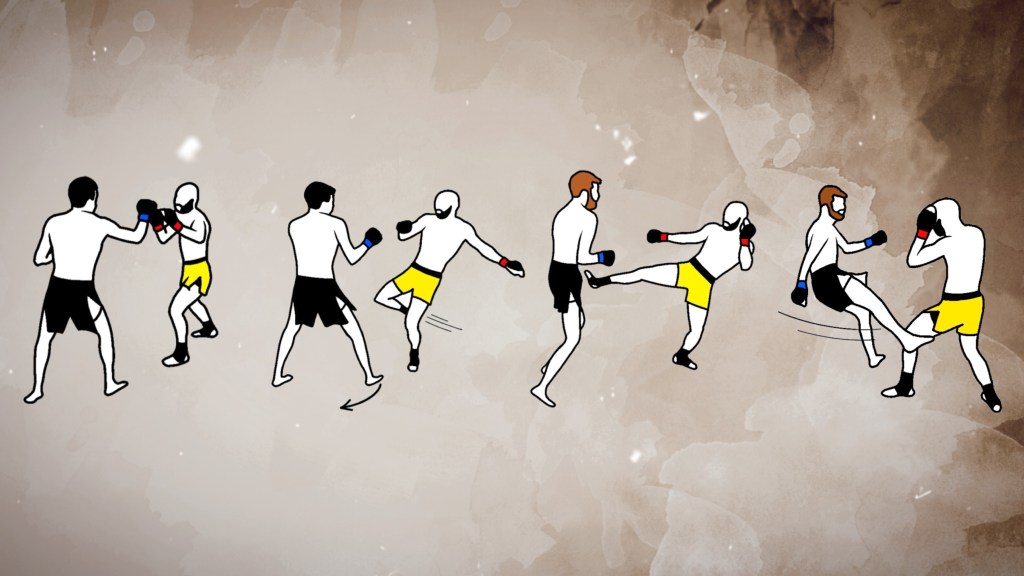
Sandhagen handles punches with this concept too, just as the opponent think he’s circling into their overhand, Cory’s closing off his open-side to deflect it with a piece of bone.
In the diagram below Sandhagen’s goes from hand fighting, switching stances and utilizing a long guard to get down behind the lead shoulder to shield himself from the punch.

Whether or not your opponent’s right hand is stopped by a chunk of bone or lands in a cross-counter position will depend on the position of your lead elbow. Preferably, you’d want to point the lead elbow up, resulting in the lead shoulder automatically gluing itself to your chin. Go ahead and try this out even if you’re sitting down right now! It’s a wonderful example of body mechanics. To further add to this, roll your head down towards the open-side at a 45 degree angle and over the rear leg. This provides an extra bit of protection and can take the sting out of the opponent’s punch by the time it’s completed a full range of motion. Stepping in can have the affect of smothering the punch having it completely land over your back, and stepping back can have the affect of the punch landing on the forearm area of the long guard. But those are just the defensive tactics, Sandhagen’s always walking that tightrope between offensive and defensive.
Of course this method of defense leaves your body vulnerable but if its a roundkick or body punch, you can twist your hips in the opposite direction to protect the open-side and allow it to land on your back. With all that said.. JUST closing off the open-side isn’t a definitive answer for right-sided attacks, it’s simply one method or a second option that can be added to an already sharp defensive game to deal with kicks.
What does it look like when a fighter circles into the overhand without implementing any type of frame or defensive action early enough to avoid, deflect, or smother the punch?
To look at a more advanced setup of attacking the closed-side, let’s turn to none other than Aldo/Mendes 2.
The dynamic of open/closed-side striking changes when fighters engage inside the pocket. It’s a range where kicks lose their effectiveness and getting a frame inside the opponent’s punch (preferably on the shoulder or bicep) to diffuse punches works wonders. The key is to get the frame in place early, before your opponent has completed the weight transfer, if you wait too long to extend the hand out you’re letting your partner complete a full range of motion, making it more likely for them to off-balance you with the punch. Furthermore the frame or long guard is great for smoothly transitioning to collar ties, look no further than Petr Yan or Israel Adesanya. Chad Mendes’ setup is brilliant, he had spent a considerable amount of time handfighting from closed-stance and was sneaking in lead lowkicks (you can see Aldo turn his shin inwards to check a potential kick) Chad flashes both hands out to disguise his real entry, the left hook to the body. The great thing about bodywork is it directs attention away from shots upstairs, in this case the right hook.
I don’t believe fighters to be telepathic but feints are about as close as you can get to having control over someone in the cage. Depending on how they’re utilized, feints have the ability of freezing the opponent, gathering information, drawing overreactions or causing them to lash out with counters.
Downward Elbows
The name “downward elbow” implies that the elbow travels from point A to point B in a straight line, however thats not the case. The trajectory starts outside of the hip and shoulder and archs inwards like a curveball in baseball, similar to a reverse question mark kick where the preliminary motion looks like a roundkick but as the hip rotates it turns into a teep.
When you teach beginners this technique the best way for them to grasp the concept is to make them cup the opposite ear with the palm of their hand, and have them stand in front of a mirror practicing bringing the elbow down the bridge of their nose.
What’s unique to Haggerty’s downward elbow, is he’ll often employ it as a feint. Showing it to the opponent to either get them reacting so he can reposition himself or using it to force the opponent into repositioning. The feint works because everyone knows it’s a trick he has up his sleeve, it may not be as convincing coming from a fighter that’s less adept and has a shallower toolbox.
Moving in for a downward elbow is risky because it exposes your open-side to counters and a well-placed check hook could shut your lights out. The solution is setting the entry up with feints and handfighting. Haggerty will establish that needling lead teep, so he can cover ground with a raised lead knee (feinting the teep). The benefit of this technique, is when you land it allows you to generate a tremendous amount of weight transfer onto the lead leg like you would for a cross.
Extending the lead hand when moving in for a downward elbow not only serves as protection and a range-finder but the frame can be manipulated by placing it across the centerline to obscure the opponent’s vision from the rear elbow, furthermore it can be used to strip the opponent’s lead hand down opening a path for the elbow, and last but not least, getting the lead hand out to post can prevent you from unnecessarily crashing into the clinch.
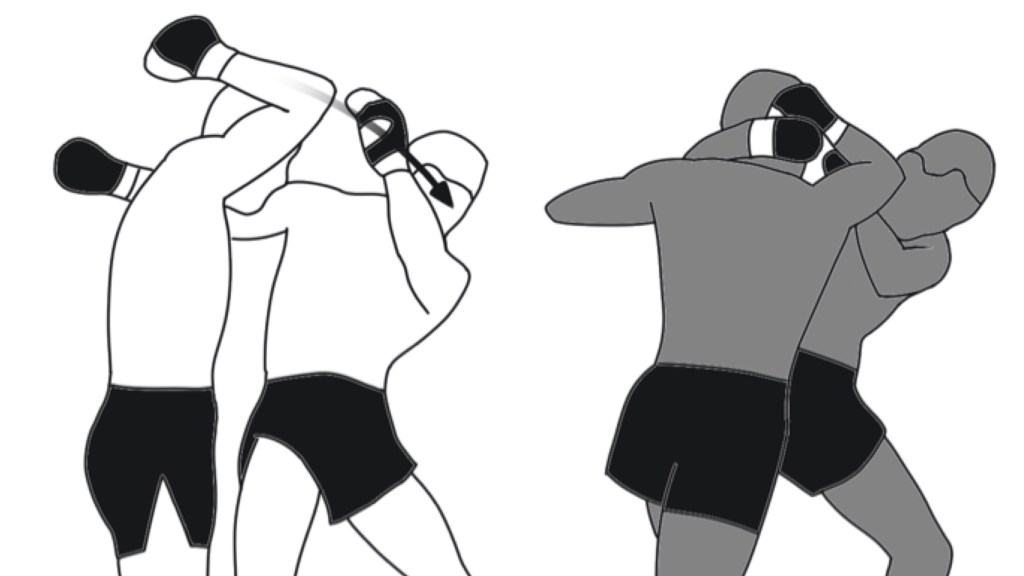
Extending the hand out to stop the downward elbow can be an ineffective form of defense since the elbow be thrown to loop around the guard rather than coming down the centerline.
It can be difficult for the opponent to block the point of the elbow itself, so it leads to them pulling away from the elbow or trying to control the wrist/forearm on the entry.
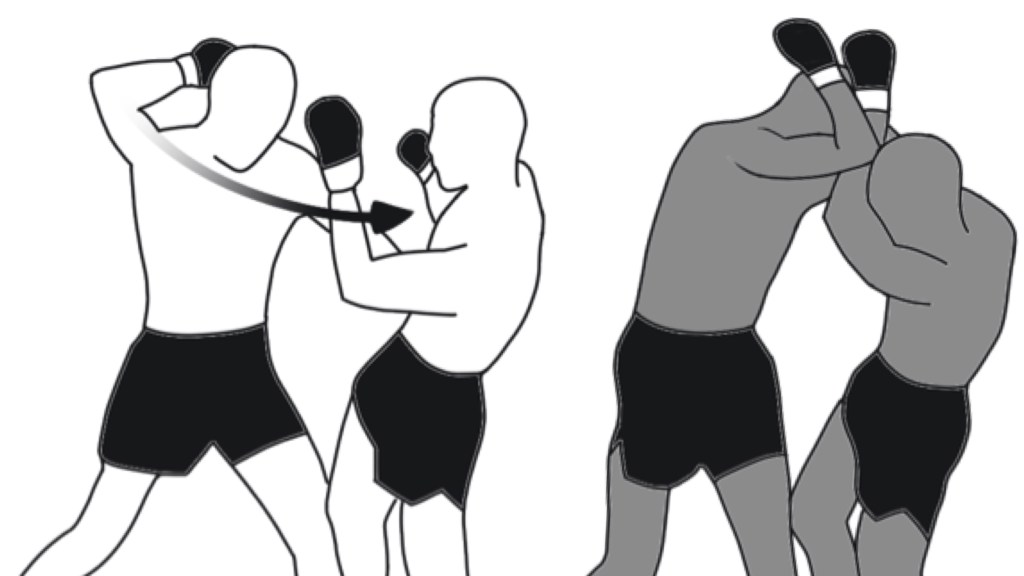
As far as I know, Rambaa Somdet was an early originator of the side-on downward elbow from inside position in the clinch.
However, the wrist functions separately from the elbow. It’s a horrible mistake in clinch exchanges to think controlling the wrist means controlling the entire arm, in this case Sam-A goes to control both wrists but Haggerty’s pinched-in guard gives him inside position, allowing him to crash in with a spear elbow.
In a traditional handfighting scenario (where both opponents are pawing for hand-positioning) the hand can be pulled in towards the body while sending the elbow over the grip-fighting-hand to slice around the guard.
Sylvie has an excellent video with the buttery smooth Yodkhunpon demonstrating this technique. Yodkhunpon pivots around the lead leg and explains, you don’t want to push down on their hand before elbowing because it’s a “tell” the opponent will be able to read.
If the opponent stands their ground and uses head movement to avoid the downward elbow, then Haggerty’s feint has served one of it’s many purposes.. the elbow can be converted into a frame and used as a clinch entry, allowing Haggerty to break their posture, force them to reposition, set up a knees or additional elbows, look for sweeps or possibly a highkick as they break. Another UK fighter who likes to take advantage of similar opportunities during clinch breaks would be Leon Edwards.
Missing any variation of elbow will likely result in sudden clinch exchanges, so it’s important to have built-in responses for these situations. In the GIF above, Petchmorakot comes up short on the downward elbow when he meets Yodsanklai’s frame, finding himself crashing into the clinch. From there Petchmorakot converts it to a crossface, which creates space and forces Yod to let go of the collar tie.
The Reverse Elbow
One of the common reasons fighters are reluctant to throw the reverse elbow is because it involves being in a squared stance for an extended period of time or almost entirely turning your back towards the opponent. The Reverse Elbow is one of the rare strikes that can cause significant amounts of damage on the reset to your neutral stance. An incredible amount of power and torque can be conjured by pulling limbs back, vs pushing limbs forward. Almost all forms of strikes involve extending, turning/twisting, snapping, and transferring weight forward. Anytime you see the reverse elbow land, rest assured it was probably the fighter’s Plan B. Take Haggerty’s reverse elbow for example, it’s a beautiful way of converting missed strikes into opportunities for new ones. Haggerty uses the switch-step and handtrap to setup the right straight, missing by a hair, Jon steps the right leg through into southpaw to get closer to his man while chambering the hand back to unleash the elbow from a blind angle, leaving Sam-A wondering what hit him.
You’re probably wondering, what happens when opponent’s move out of range from the downward elbow? After all… it’s a telegraphed move and the striking world’s equivalent of waving Thor’s hammer over your head.
If they manage to get out of the way, Haggerty takes the next logical step, following up with a lead highkicks in an attempt to catch them pulling back from the elbow. I’ve always loved this tactic and believe its fairly underutilized, going from the shortest ranged weapon to the longest ranged weapon with intent to punish their exit.
Against Naito, Haggerty showed a new non-committal approach to moving in with the downward elbow. He’d give short glimpses of it before bouncing out of range. While it may look like he’s unintentionally revealing it, its quite the opposite. He’s probing for reactions and throwing off Naito’s rhythm. By feinting it in short bursts, he can get a read on what counters Naito’s looking for and based on those reactions, he can setup the unexpected. There’s 3 key moments in the GIF above.
1) The blatant telegraph, “This is what’s coming next.”
2) Getting the read on Naito’s counter left hook.
3) Naito’s expecting Haggerty to get into elbow range, Haggerty nullifies Naito’s rear hand by trapping it with the lead hand, and turns the downward elbow into a long right straight to crack Naito while he thinks he’s at a safe distance. Haggerty’s using distance deception, by programming Naito to think he’s safe, Haggerty’s basically saying “look at ALL this distance I have to cover, before I can reach you with my elbow” only to pull up short and blast him with a 4oz glove.
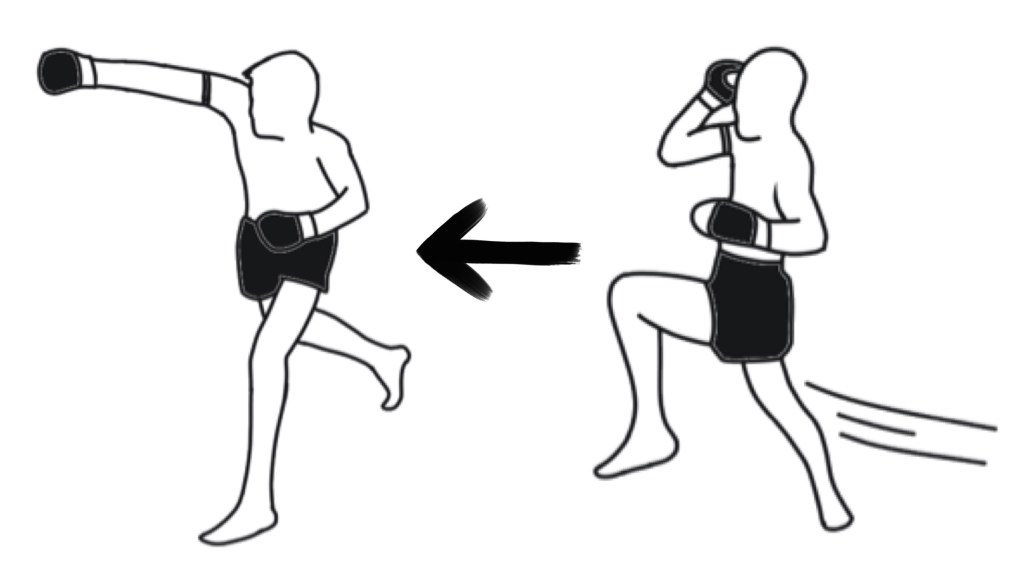
How else will Haggerty build upon the teep feint with these other weapons established?
Expanding on where we left off, Haggerty uses the skip-up lowkick to initiate the exchange, before going into his usual shifting teep feint, as Naito pulls too far out of range for Haggerty to effectively use a handtrap, he’ll instead flash the lead hand as a quick misdirection to draw out the counter left hook, and he’ll close the exchange by tack on the lead highkick off a push. That’s a lot to take in, forget about the individual choice of strikes for a moment and notice Haggerty’s rhythm during the exchange. There are slight pauses in-between each strike, where he’s reading the distance to adjust his next move and giving himself enough time to see a counter coming, instead of just throwing a predetermined combination, closing his eyes and hoping for the best.
Haggerty used a similar setup for an elbow in his fight with Lasiri. Lasiri spent the majority of the fight anxiously marching forward, trying to force Haggerty into clinch exchanges. Being the taller fighter, Haggerty would take away distance by stepping his lead leg back into southpaw to hammer outside kicks when Lasiri stepped in. Anytime Haggerty wanted to disguise his pocket entries, he wouldn’t have to close much distance since his advancing opponent was doing fifty percent of the work for him. To be clear, Haggerty’s not quite an ultra-slick backfoot kicker like Superlek. Nor is Haggerty enforcing his kicks through pressure, but his style is a balance between the two. Plus he has extraordinary mechanics and his game works best when he can confuse opponents, and force them to guess which range he wants to play at.
The switch-step feint continues to draw reactions because the kick is constantly re-established as a threat, making it difficult for Naito to not bite on every twitch of the lead leg. However Naito began coming back with quicker counters in response to Haggerty’s handtraps.
Haggerty was constantly jamming Naito’s entries with lead teeps to the knee, not only do they stop Naito in his tracks and interrupt his combinations, but it forces him to come up with more complex entries. While a bladed-stance allows for quicker linear movement, it consequently puts your lead-leg closer to the opponent. This is the problem Naito ran into. He’s accustomed to pushing off the backfoot and transferring weight forward when punching to cover large gaps, making it easier for Haggerty to read when Naito was entering range, meaning all he had to do was poke knee as Naito stepped-in.
Haggerty goes back to the switch-step but instead of firing an immediate switch kick, he plants into southpaw and plays with Naito’s expectations by re-establishing the open-side threat with a naked body kick. Haggerty takes the inside angle on his step-in, which gives his left hip more room to rotate through before the kick lands. Just like punches from the inside angle against an opposite stance opponent, roundkicks can be useful for bashing through the guard and catching them from an unexpected blind angle.
Haggerty also has an interesting exit built in off the kick, most southpaws will generally bring the rear foot to the back of their stance upon returning from the kick, or convert their kicking leg into a floating block in hopes to ward off a counter kick. Haggerty steps his kicking foot down into orthodox and bounces out of range by pushing off the foot for a much quicker exit, it can be quite useful for managing distance or retreating at angle while coming down off the kick, or vice versa eating up more of the opponent’s space and forcing them to take an additional step back.
Haggerty can utilize the switch-step and shift defensively, by stepping back into southpaw anytime Naito steps-in, Haggerty can easily take away space to make Naito’s kicks fall short. However, this also takes Haggerty out of range to counter, while the switch-step leaves him in range to counter.
There’s yet another setup off this shift when Haggerty will close off his open-side to Naito’s round kick, use the pendulum lowkick to mask the shift into southpaw and feint the southpaw teep to close distance, firing off an orthodox round kick while punching off that kick to discourage Naito from catching and countering.
Sam-A and Naito were both able to have success interrupting the shifting right hand by teeping Haggerty’s left hip. By doing so, they essentially put up a blockade to prevent Haggerty from getting the few extra inches he needs to land the punch. This is the downside of shifting attacks, it leaves a small window for sharp opponents to capitalize on. Typically fighters that get stuck on the end of their opponent’s ranged weapons forget that they themselves have ranged weapons. In boxing, it’s better to jab back with the guy that is jabbing. Likewise, even if you’re an inside fighter and your goal is to work your way into the pocket, teeping with a teeper is a great way to contest at all ranges and hide your intentions.
Overall Recap
After the Haggerty knockdowns, Naito suddenly felt the urgency to move his head and increase the volume; that had been previously been muted by Haggerty’s bag of tricks. Naitio’s became more active at getting in and out of range, mixing his shot selection, pressuring countering effectively, and working the UK Nak Muay with kicks up and down the body.
Although it should be noted that Haggerty took more of a backfooted, “protecting the lead” approach. This could explain why Naito came on strong and looked more aggressive in the 3rd round, because the threats he previously had to react and respond to, were gone. He could safely pressure Haggerty, and that is where Naito feels most comfortable, when he’s given the space to work combinations on a retreating opponent.
Just for a general overview, all of the setups are pictured below




 Downward Elbow